AI in Endourology: From Futuristic Concept to Clinical Reality
The landscape of endourology is undergoing a significant transformation as Artificial Intelligence (AI) moves from a theoretical concept to a practical tool influencing diagnosis, surgery, and patient care. In a featured session titled "From molecular to machines: The endourology experience," held on Sunday, 15 March 2026, experts gathered to discuss whether these technologies are truly ready for routine clinical application.
A New Era of Diagnosis and Decision Support
According to Dr. Carlotta Nedbal from the Urology Unit at IRCCS San Gerardo dei Tintori, AI is already demonstrating "outstanding performance" in stone disease diagnostics.
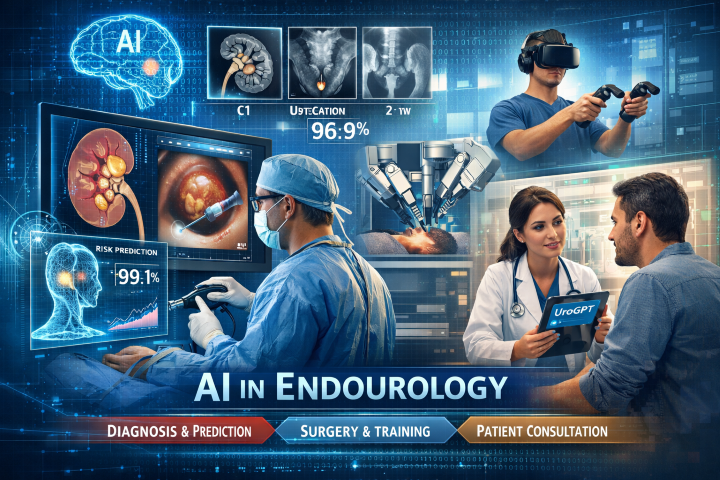
Precision Imaging: AI models have reached a 96.9% mean precision for stone detection using CT, ultrasound, and KUB imaging.
Predictive Accuracy: Machine Learning (ML) can predict stone composition with 88.2% accuracy, consistently outperforming traditional radiological assessments.
Standardization: These tools aim to reduce variability between different readers and help standardize reporting for procedures like SWL, URS, and PCNL.
Redefining Surgery and Training
AI's influence extends directly into the operating theatre and the training lab.
Intraoperative Support: The EAU Section of Endourology has highlighted AI's role in providing real-time feedback for stone recognition and automated calyceal puncture guidance.
Complication Prediction: Algorithms trained on the FLEXOR registry—analyzing over 6,500 cases—achieved up to 99.1% accuracy in predicting postoperative sepsis.
Virtual Reality: VR simulators are becoming a core component of urological education, with 2025 data showing they significantly improve procedural performance in BPH surgery.
Empowering the Patient
The patient experience is also being reshaped by generative AI. The UroGPT™ chatbot has seen high engagement, with over 70% of kidney stone patients reporting it improved their understanding of their condition. By providing reliable and affordable professional consultation, these platforms may eventually alleviate pressure on healthcare systems while improving the detection of "red flag" cases.
Barriers to Universal Adoption
Despite the technical successes, several hurdles remain before AI becomes a universal standard of care:
Validation: There is an urgent need for multicentre validation and prospective trials to prove reliability across different settings.
Explainability: A lack of "explainability" in some models can reduce clinician trust; it is vital that algorithms provide clinically intuitive predictors.
Cost and Infrastructure: Significant financial resources and infrastructure are required, which may limit integration in low-resource settings.
Ethics: Unresolved concerns regarding data privacy, bias, and legal accountability continue to be a major challenge.
The Outlook
While AI is already improving care in data-rich, high-volume centers, it currently serves as a powerful adjunct rather than a replacement for clinical judgment. Experts believe the next phase of evolution will rely on EAU-endorsed standards and collaborative trials. If these standards are met, AI will not be a disruptive force, but an "enabling partner" in precision endourology.